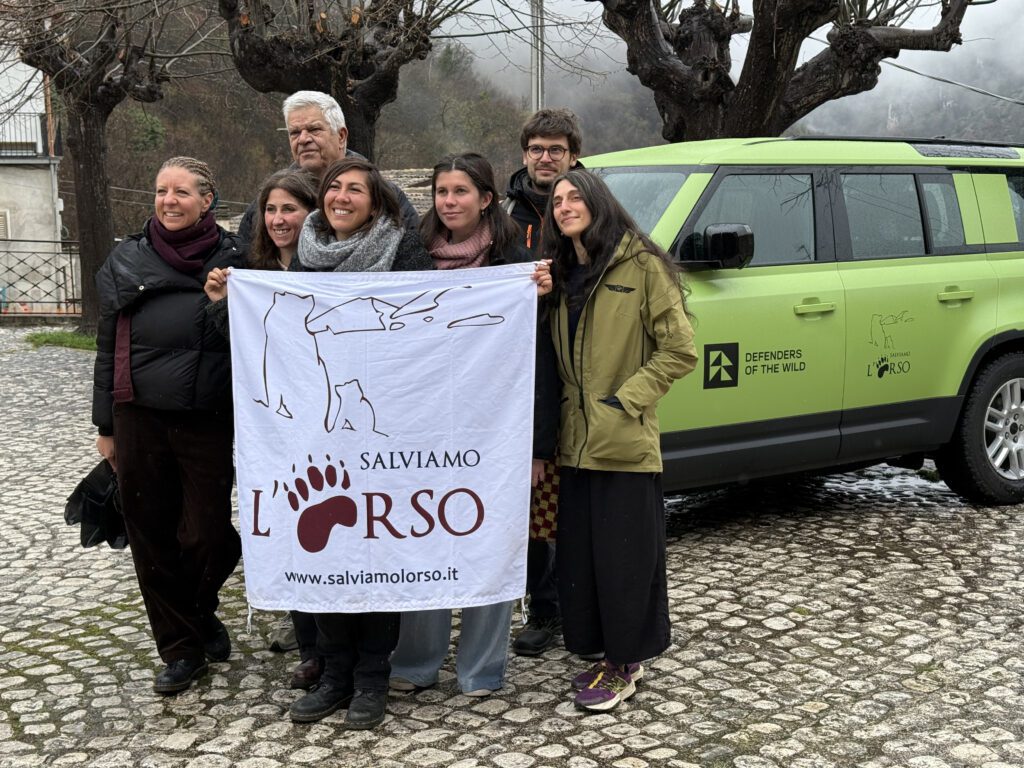

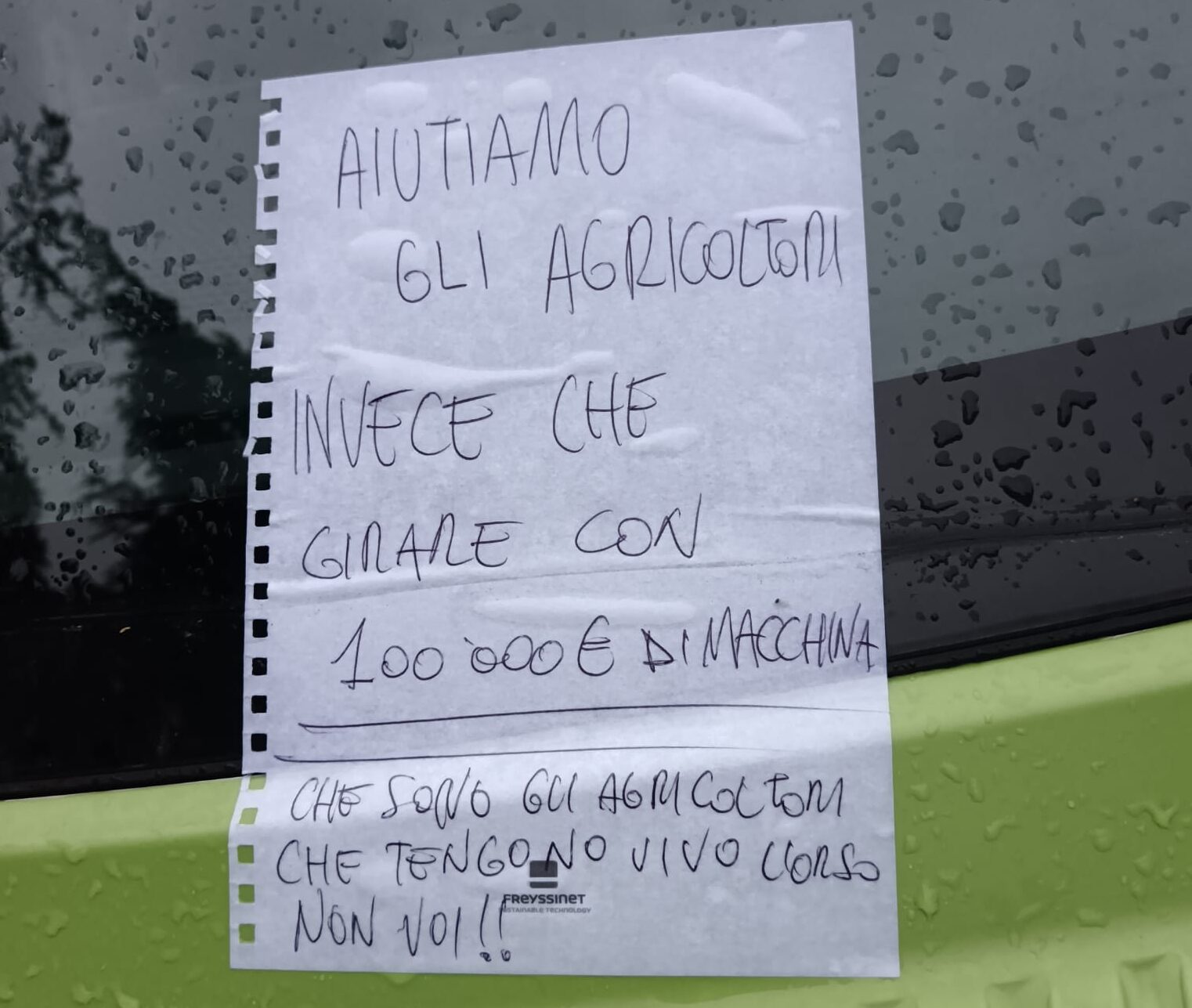
In recent days, we have seen comments and accusations claiming that Salviamo l’Orso owns a Defender worth €100,000 and that, according to some critics, those same resources should instead be allocated to farmers and livestock breeders. We understand that the issue may raise questions and spark debate. For this reason, we believe it is important to clarify a few facts.
The vehicle in question was not purchased by Salviamo l’Orso, nor was it paid for with funds allocated to conservation activities or field operations. The Defender was awarded to us as part of the Defender Awards, an international program that recognizes particularly innovative and impactful projects in the fields of nature conservation and biodiversity protection.
Our association received the award in the category dedicated to wildlife conservation thanks to a project designed to support our activities in the Roveto Valley, one of the expansion areas of the Marsican brown bear. The project was recognized for its contribution to the conservation of this critically endangered bear population and for promoting coexistence between people and wildlife.
Achieving these goals requires a constant presence on the ground by members of our staff, alongside volunteers, and the support of local communities, which are, in fact, the primary beneficiaries of our efforts.
There is one important point that must be emphasized: the vehicle is NOT owned by Salviamo l’Orso.
It has been provided to us on a two-year loan agreement, allowing it to be used exclusively for the activities connected to the award-winning project. At the end of this period, the Defender will be returned to the organization behind the award program.
We are aware that, in a photograph, an off-road vehicle may appear to be a symbol of luxury. However, anyone familiar with our work knows that much of our activity takes place in mountainous and often remote areas, along unpaved roads, in challenging weather conditions, and across territories where quickly reaching a livestock farm, agricultural operation, camera trap, or monitoring site can make a significant difference.
We would also like to highlight an aspect that is often overlooked.
The Marsican brown bear is not only an iconic species of the Apennines but also a valuable asset for local economies. Every year, it attracts thousands of visitors interested in nature tourism, generating benefits for guides, accommodation providers, and local businesses. According to the LIFE ArcPROM project, the media and promotional value associated with the species is estimated at approximately €11 million.
While we firmly believe that the bear’s protection should not depend on economic considerations, conserving the Marsican brown bear means safeguarding both a unique natural heritage and an opportunity for sustainable development in rural and mountain communities.
This is a responsibility that concerns all of us and one that we have embraced for years by working alongside livestock breeders, farmers, beekeepers, local administrations, and citizens through prevention initiatives, monitoring programs, scientific research, and coexistence education.
In conclusion, we would like to offer one final reflection.
If an Italian organization succeeds in winning an international award thanks to a project developed in the Abruzzo region, perhaps the headline should not be that it “has a Defender.”
Perhaps the real story is that the work of scientists, volunteers, technicians, researchers, and local communities has been recognized internationally as a model of excellence.
We have always welcomed dialogue, including critical discussion. We are less enthusiastic about the circulation of incomplete or inaccurate information.
We will continue doing what we have done for more than ten years: working in the field to build practical coexistence between people and wildlife, making use of every tool made available to us.
Including, when necessary, a Defender that does not belong to us and that has been entrusted to us precisely so that we can do this work more effectively.