

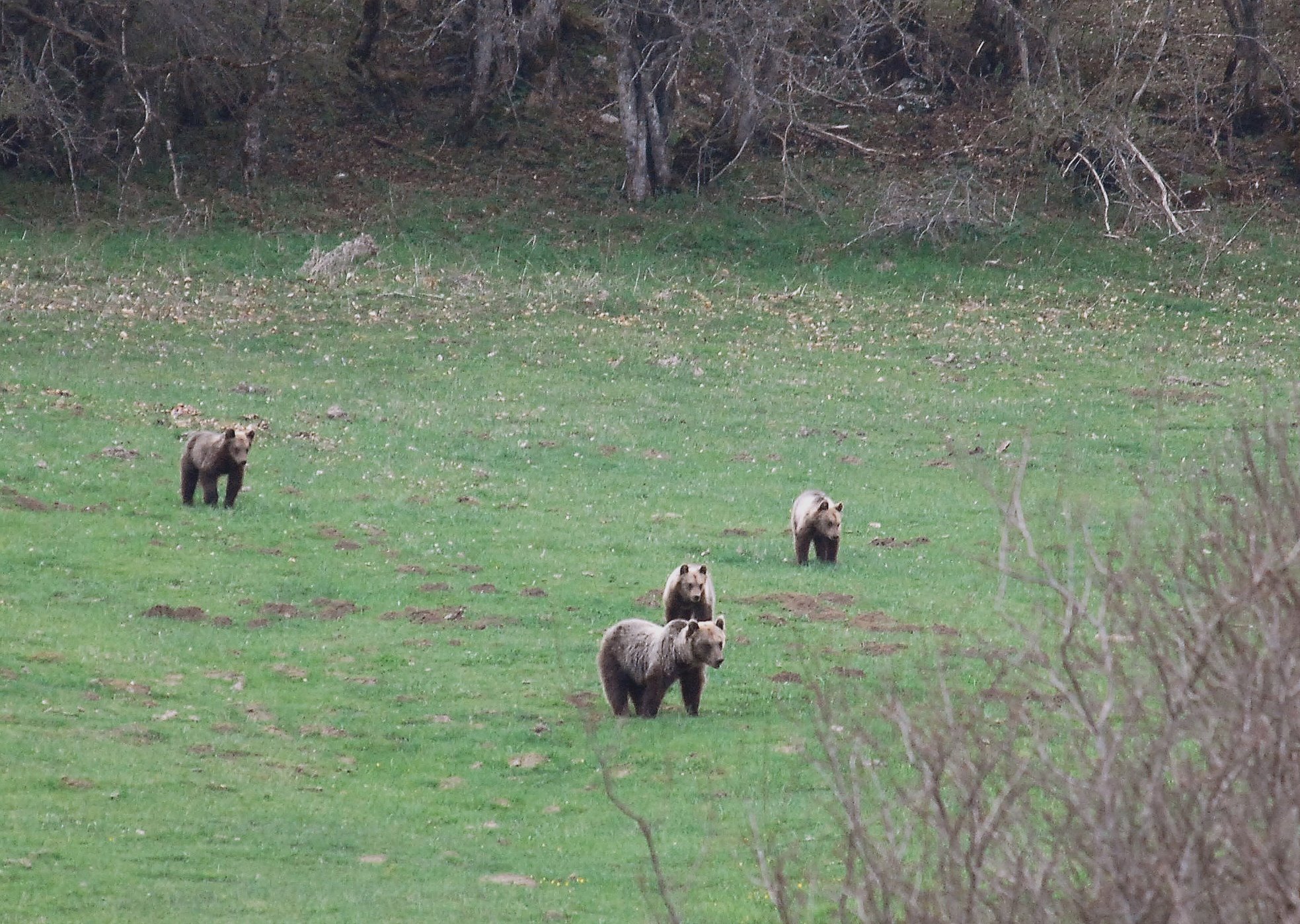
Good news for the Marsican brown bear. The annual count of females with cubs born this year (FWC – Females With Cubs), coordinated by the Abruzzo, Lazio, and Molise, recorded 7 females accompanied by at least 16 cubs in 2025—a result that confirms the population’s strong reproductive trend and is consistent with the previous year’s figures.
Counting females with cubs is one of the main tools for monitoring the Marsican brown bear, one of the rarest and most endangered bear subspecies in the world. Although these data do not allow for an estimate of the total number of bears in the Central Apennines, they serve as a key indicator of the population’s annual reproductive success.
Rigorous monitoring
The census is conducted every year between July and September, a period when bears are most frequently found in areas rich in buckthorn, one of their main food sources during the summer.
Counts are conducted simultaneously by numerous field staff stationed at strategic locations throughout the area, thereby reducing the risk of duplicate counts due to animal movements. This work is supplemented by camera trapping, verification of reports collected in the field, and, when necessary, genetic analysis, which help increase the reliability of the results. This protocol has been in use since 2006 and involves park staff, the Forestry Carabinieri, researchers, and volunteers.
A positive result, but the challenge continues
The birth figures are certainly encouraging, but experts urge caution in interpreting them. For an endangered species like the Marsican brown bear, birth is, in fact, only the first step.
The survival of cubs during their first year of life is a particularly critical phase. In 2024, 7 females with 14 cubs were recorded; by the end of the season, at least 12 had survived, and observations made in 2025 confirmed the presence of at least 7 of those young bears—a figure consistent with the survival rate observed in previous years.
Conservation and Coexistence
The Marsican brown bear population remains small, and its conservation depends not only on reproductive success but also on reducing mortality caused by human activities, such as roadkill, poisoning, poaching, and improper management of food sources.
For this reason, the annual monitoring of females with cubs is a valuable tool: it allows us to track population trends over time and to assess the effectiveness of the conservation measures implemented by institutions and organizations committed to the conservation of the species.
The results of the 2025 census thus confirm a positive outlook for the future of the Marsican brown bear. However, the survival of this globally unique population will continue to depend on the shared commitment of management agencies, local communities, and citizens to foster ever-better coexistence between humans and wildlife.