
For thirty years, this remarkable area has helped safeguard the biodiversity of the Apennines, demonstrating that protecting the Marsican brown bear can also create opportunities for local communities to thrive. In Pettorano sul Gizio, three days of events, activities and shared experiences celebrated a story built on dedication, knowledge and collaboration.
From 23 to 25 October, the community of Pettorano sul Gizio came together to celebrate the 30th anniversary of an institution that has helped shape the present and future of this small Apennine village. Established in 1996, the Monte Genzana Alto Gizio Regional Nature Reserve is deeply rooted in the territory where it was founded, a place where nature is a precious resource and a fundamental part of local identity. Over the past thirty years, the Reserve has played an important role in conserving the biodiversity of the Apennines and, in particular, in protecting the Marsican brown bear.
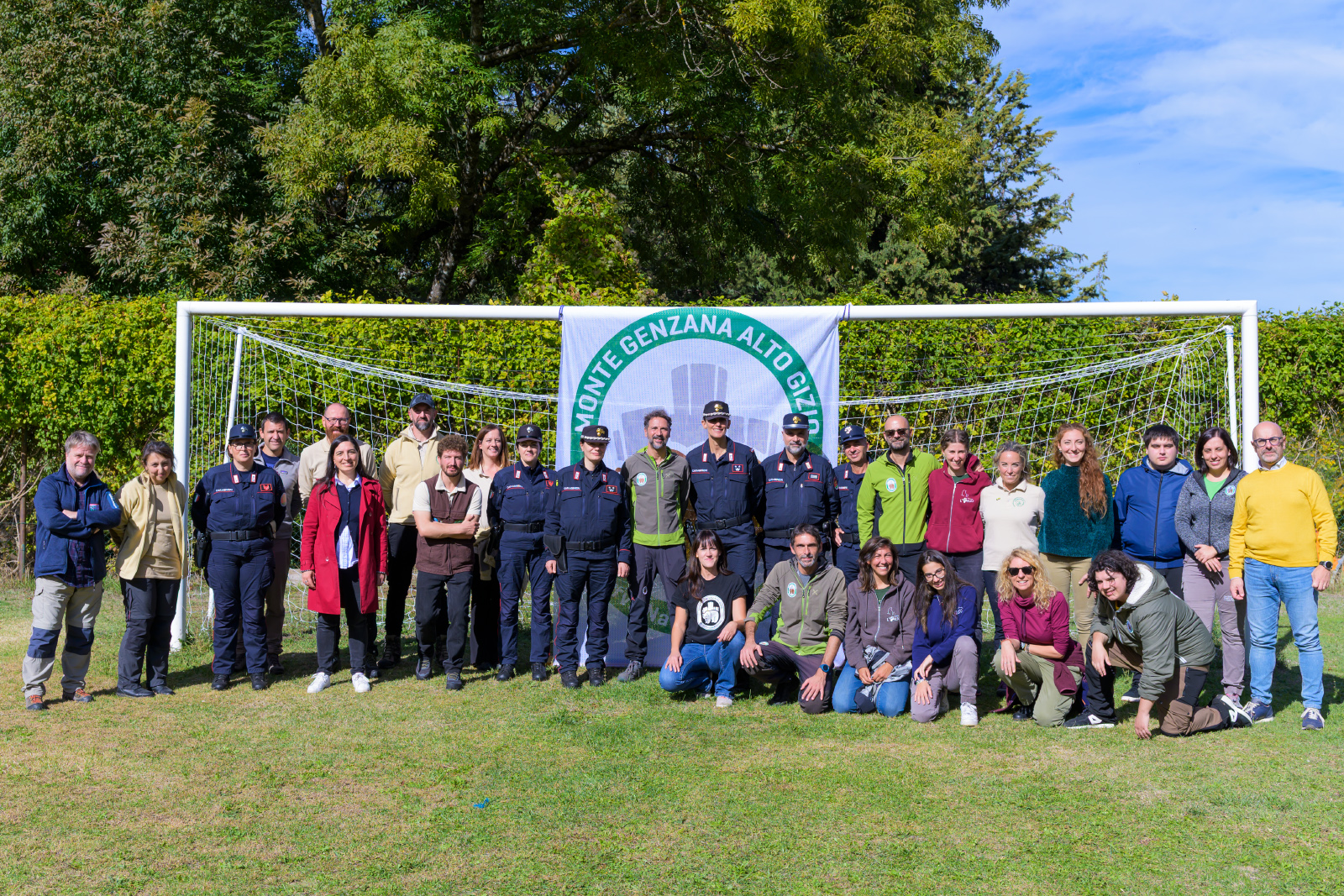
For three days, members of the local community, public administration, associations and representatives of organisations from across the area came together to look back on a history of commitment and achievement. The anniversary was also an opportunity to reaffirm a shared sense of community, strengthen relationships built over the years and renew appreciation for a natural heritage that belongs to everyone. Dedicated to nature, culture, environmental education and discussion, the celebrations provided an opportunity to reflect on the journey so far, recognise the contributions of the people and organisations who have made it possible, and look ahead together to the challenges facing the Reserve and the surrounding area in the years to come.
A Green Bridge Between Two Major Protected Areas
Covering more than 3,000 hectares, from around 530 metres above sea level along the Gizio River to the 2,170-metre summit of Monte Genzana, the Reserve protects a variety of interconnected habitats, forming a mosaic of woodlands, pastures, mountains, waterways and rural landscapes.
Its importance extends far beyond its administrative boundaries. The Reserve plays a strategic role as an ecological corridor between Abruzzo, Lazio and Molise National Park and Maiella National Park, helping maintain habitat connectivity and enabling wildlife to move across the Apennine landscape.
For species such as the Marsican brown bear, this connectivity is essential. The survival of such a vulnerable population depends, in part, on its ability to access different areas, find food, move safely through the landscape and establish a presence in new territories.
In this sense, the Monte Genzana Alto Gizio Nature Reserve is much more than a beautiful natural area: it is an essential part of a wider ecological network, whose protection requires collaboration, long-term vision and continuous work on the ground.
The Marsican Brown Bear: From a Hidden Presence to a Symbol of a Thriving Landscape
As repeatedly emphasised throughout the three-day celebrations by Antonio Di Croce, Director of the Reserve, Stefano Orlandini, President of Salviamo L’Orso, and Antonio Carrara, President of Rewilding Apennines, one of the most significant achievements over the years has been the growing understanding of the Marsican brown bear’s presence within the Reserve.
Before the Reserve was established, official records of the species in the area were relatively scarce. With the launch of the first systematic wildlife surveys and the subsequent expansion of monitoring activities, however, the picture has changed considerably.
Since 2012, in particular, the Reserve has stepped up its monitoring and data collection efforts, working alongside the national parks and participating in the Marsican Brown Bear Monitoring Network in Abruzzo and Molise (RMAM).
Camera traps, searches for signs of bear presence, non-invasive genetic analyses and field observations have helped researchers gain a better understanding of the bears using the area, track their presence over time and gather essential information to guide conservation efforts.
Data from 2024 painted a particularly encouraging picture: 342 signs of bear presence were recorded, and 15 individual bears were identified, a record for the area. Even more significant was the documentation of three family groups, with females accompanied by their cubs. This is an encouraging sign that highlights the Reserve’s potential role in the expansion of the Marsican brown bear population, while also bringing greater responsibility to ensure its protection.
These results did not come about by chance. They are the fruit of years of dedicated work, expertise, scientific collaboration and in-depth knowledge of the area. They also serve as a reminder of a fundamental truth: conserving a species requires more than simply knowing it is present. We must understand its behaviour, identify the threats it faces and create the conditions it needs to survive and thrive.
Coexistence Is Built Every Day
The presence of bears in inhabited areas inevitably brings challenges. In this respect, Pettorano sul Gizio is an important example of how scientific research must go hand in hand with practical prevention measures, public awareness and dialogue with local communities.
Over the years, numerous initiatives have been implemented to reduce risks and promote coexistence between people and wildlife. These include the installation of electric fencing to protect vulnerable properties, measures to prevent damage, guidance on appropriate behaviour, awareness-raising activities and initiatives to reduce the risk of road accidents involving wildlife.
These efforts may often go unnoticed, but they are crucial. Over the years, they have been supported by close collaboration between the Reserve, Salviamo L’Orso, Rewilding Apennines and Abruzzo, Lazio and Molise National Park, alongside numerous other organisations and institutions committed to protecting the area. This network of partnerships recognises the Reserve as a successful example of conservation in practice and a valuable partner in developing long-term projects, demonstrating that nature conservation is not an obstacle to development, but a fundamental building block for the region’s future.
Three Days to Celebrate a Shared History
The Reserve’s 30th anniversary celebrations turned Pettorano sul Gizio into a meeting place for local residents, students, practitioners, researchers, associations and institutions.Il programma del trentennale ha trasformato Pettorano sul Gizio in un luogo d’incontro tra cittadini, studenti, operatori, ricercatori, associazioni e istituzioni.
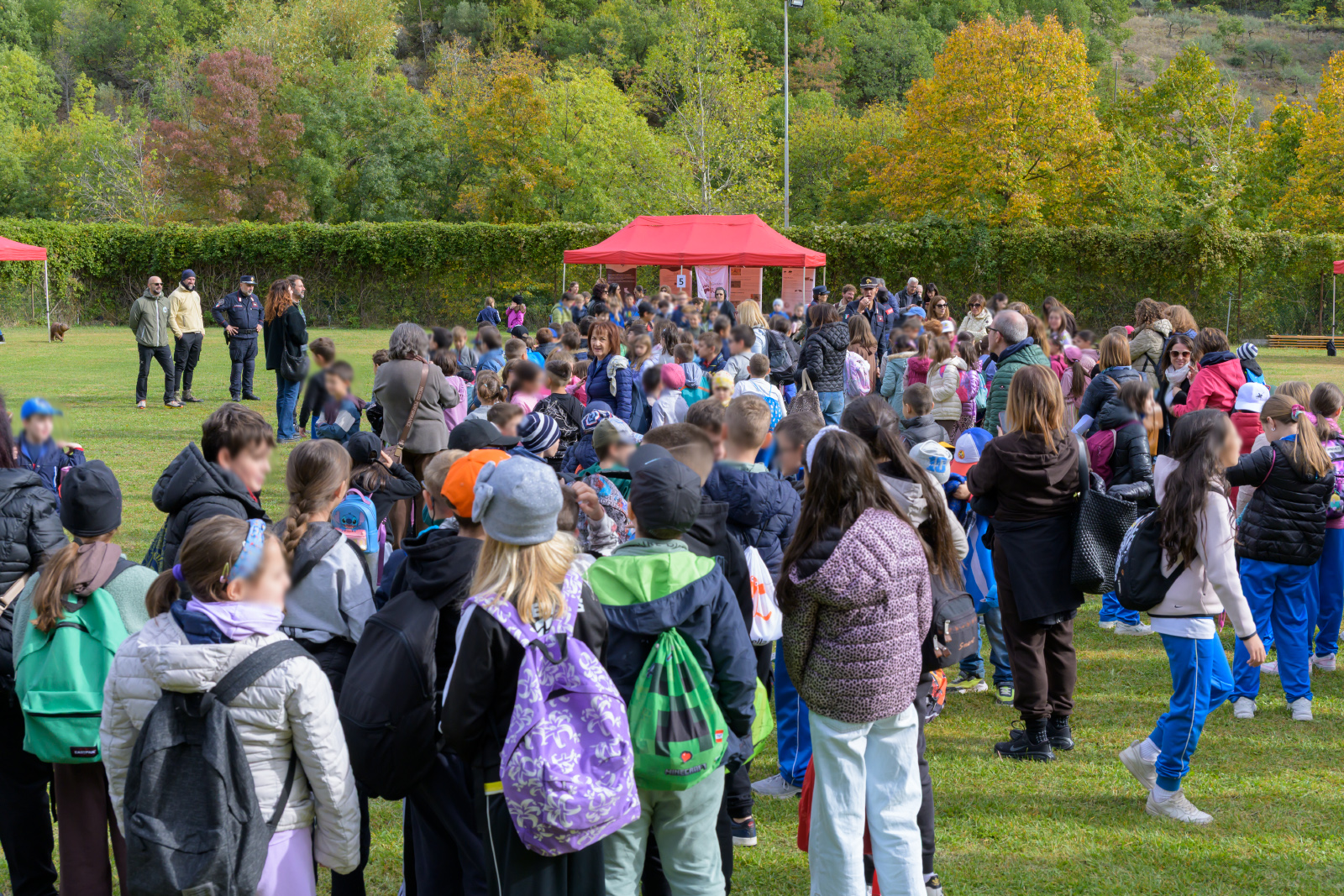
On Friday, 23 October, local schools took part in educational activities organised by the Reserve’s Environmental Education Centre in collaboration with the Carabinieri Forestali (Italy’s environmental and forestry police). The event focused on younger generations, recognising that nature conservation begins with knowledge and the ability to appreciate the value of the natural heritage around us.
In the afternoon, the story of the local area unfolded through its plants, waters, landscapes and traditions, with a storytelling activity designed to rediscover the deep connections between nature and culture.
On Saturday, 24 October, Castello Cantelmo hosted the conference marking the Reserve’s 30th anniversary, providing a key opportunity for discussion and exchange. Representatives of institutions, protected areas, environmental associations and conservation organisations came together to reflect on the achievements of the past three decades and discuss future priorities.
Salviamo L’Orso also took part, represented by its president, Stefano Orlandini, contributing to a discussion directly relevant to the future of the Marsican brown bear and the landscapes essential to its survival.
On Sunday, 25 October, the celebrations opened up to a wider audience, with guided walks, educational activities and opportunities to discover the local natural heritage. Highlights included activities at the Mulini, home to the Reserve’s crayfish breeding centre, and at Castello Cantelmo, where Salviamo L’Orso worked alongside the Reserve and Cooperativa Valleluna to deliver environmental education initiatives.
These different activities shared a common message: protecting nature also means helping people discover it, creating opportunities to connect and making conservation a shared experience.
Un piccolo museo, una grande idea di futuro
One of the best examples of the collaborative work developed in Pettorano sul Gizio is the Little Museum of the Bear and Coexistence, inaugurated on 3 January 2026 inside Castello Cantelmo.
Established through a partnership between Salviamo L’Orso, Rewilding Apennines, Cooperativa Valleluna, the Reserve and the Municipality of Pettorano sul Gizio, the museum is a space dedicated to telling the story of the Marsican brown bear and its relationship with people. Rather than presenting wildlife as something distant from our everyday lives, the museum helps visitors understand how the bear is part of the history and identity of the Apennines. It offers an opportunity to explore ecology, animal behaviour, conflict prevention and our shared individual and collective responsibilities.
Its location inside Castello Cantelmo, at the heart of the village and the Reserve, is particularly meaningful. Conservation is no longer confined to the forests or left solely to specialists; it becomes part of everyday life, a story to share, an educational opportunity and a common heritage.
The museum is a tangible example of how collaboration between associations, institutions and local organisations can create valuable resources not only for biodiversity conservation, but also for the cultural development of the area.
Thirty Years of Achievements, New Challenges Ahead
The Monte Genzana Alto Gizio Nature Reserve has achieved important results: a deeper understanding of local wildlife, a well-established monitoring system, measures to prevent human-wildlife conflicts, educational activities for schools, public awareness initiatives and a network of partnerships bringing together a wide range of organisations.
However, as we know all too well, the growing presence of bears also brings new responsibilities that must be shared. Protecting the species requires sustained action, adequate resources, careful attention to infrastructure, responsible management of food sources and the ability to respond promptly to potential threats. It also requires ensuring that ecological connectivity between protected areas is not merely recognised on paper, but actively maintained through land management decisions consistent with conservation objectives.
At a time when the survival of the Marsican brown bear remains one of Italy’s major conservation challenges, funding for protected areas continues to face cuts, while political decisions increasingly undermine the work of environmental associations and the scientific community in promoting knowledge, awareness and a culture of conservation. Against this backdrop, experiences such as that of Monte Genzana Alto Gizio demonstrate just how valuable local action and collaboration can be, and how essential it is to bring together expertise, resources and shared responsibility.
Photo by Antonio Monaco