

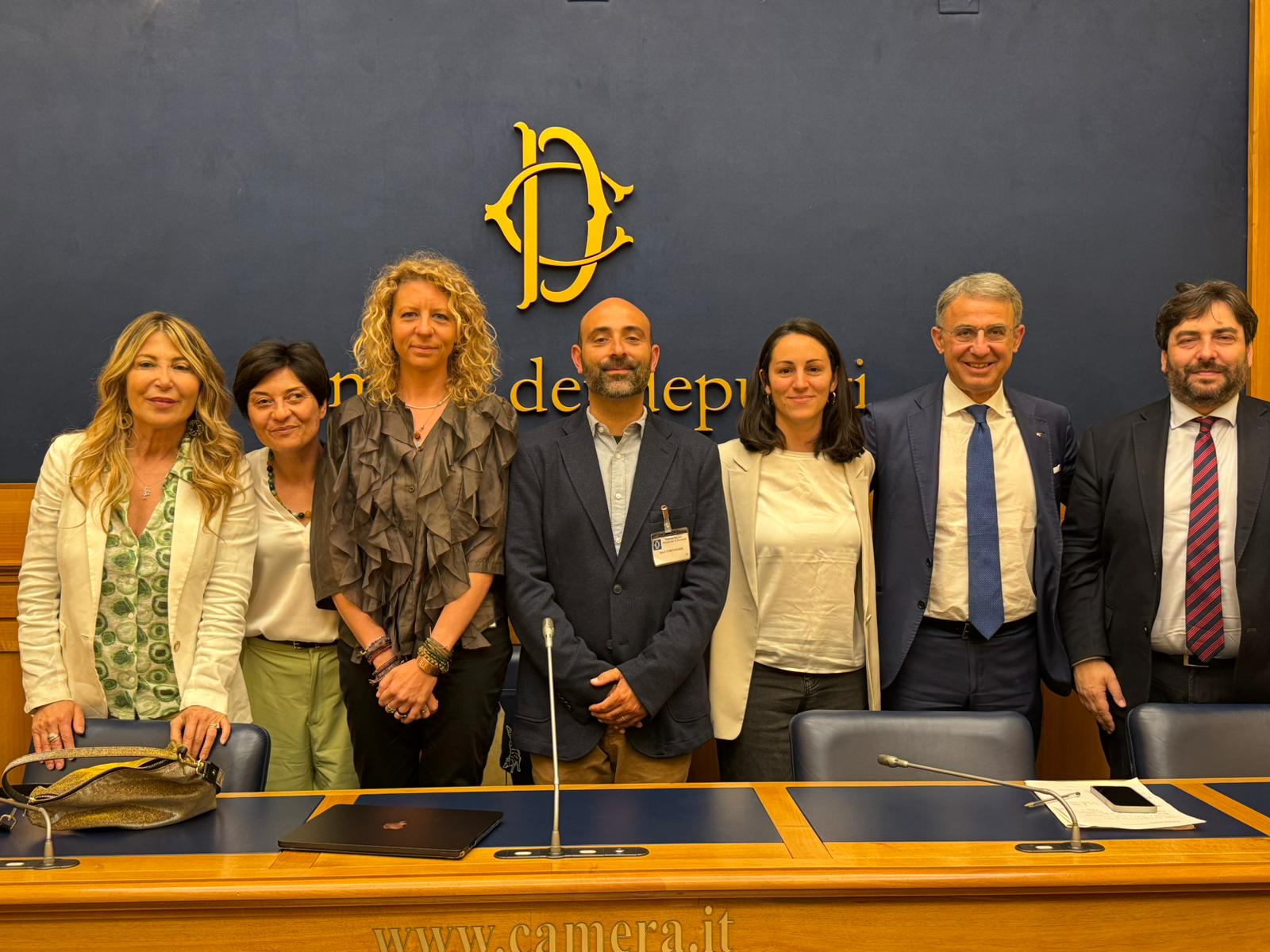
The recent cases of poisoning that occurred between April and May in the central Apennines, resulting in the deaths of at least 21 wolves and other wild animals both inside and outside the Abruzzo National Park, Lazio, and Molise, were the focus of a meeting held today in the Press Room of the Chamber of Deputies, organized by Deputy Eleonora Evi with the support of the associations “Io non ho paura del Lupo,” “Salviamo L’Orso,” and “Rewilding Apennines.”
The initiative, which focused on the issue of poisoned bait and its environmental, health, and social consequences, brought together organizations, researchers, journalists, and government officials with the goal of highlighting the growing severity of the problem and calling for a more aggressive approach to combating wildlife crimes.
During the event, Salviamo l’Orso made its contribution, reiterating the need to address biodiversity conservation through a scientific, systemic, and participatory approach.
Currently, the Marsican brown bear population numbers just 50–60 individuals, distributed mainly throughout the Abruzzo, Lazio, and Molise National Park and its surrounding areas. This extremely vulnerable population, classified as critically endangered, depends for its survival on the ability to maintain a delicate balance between conservation and human presence.
Multispecies Conservation and the Ecological Role of the Wolf
During our presentation, we emphasized that bear conservation cannot be addressed in isolation but requires an ecosystem-based, multi-species approach. In this context, the Apennine wolf plays a fundamental ecological role.
In fact, international scientific literature shows that large carnivores contribute to the stability of ecosystems, the control of ungulate populations, and the regeneration of forest habitats. Conversely, the systematic persecution of predators leads to significant ecological imbalances.
To dispel the myth of the wolf as a “bloodthirsty predator,” European data on livestock predation were also cited: According to studies funded by the European Commission, wolves kill approximately 65,500 sheep annually in the European Union—a number that represents just 0.065% of the total sheep population in Europe.
Poisonings and Toxic Narratives
The use of poison is one of the most destructive and indiscriminate forms of persecution of wildlife, capable of profoundly altering ecological balances and even endangering iconic species such as the Marsican brown bear, which represents a global common good of inestimable value. It is a systemic and widespread phenomenon throughout the country, often hidden from view, and for which no culprit is ever identified. According to data from the National Portal for Monitoring Malicious Poisonings, data collected by ISPRA, the Forestry Carabinieri, and LIFE projects, 16,826 poisoned animals were recorded in Italy between 2009 and 2024: wolves, foxes, birds of prey, griffon vultures, eagles, guard dogs, as well as domestic dogs and cats. Nearly three a day, every day, for fifteen years. “When we talk about poison, we’re not just talking about wildlife conservation. We’re talking about the rule of law. About an environmental crime whose scale, dynamics, and prevalence make it a systemic phenomenon,” stated Daniela Gentile of Rewilding Apennines.
According to Valeria Barbi, communications director for Salviamo L’Orso, “the international scientific community considers poison to be one of the most destructive and indiscriminate forms of persecution of wildlife. Those who scatter poisoned bait do not merely harm an animal. They are committing an act of aggression against public property, against biodiversity, against environmental health, and even against the public health of human communities.”
“As for wolves, at least 1,639 dead wolves were found in Italy between 2019 and 2023, with a steadily rising trend: from 210 cases recorded in 2019 to 449 in 2023. That’s more than one dead wolf per day, and this is certainly an underestimate of the species’ actual mortality rate,” said Romito of “Io non ho paura del Lupo,” further emphasizing that “causes of death directly or indirectly attributable to humans account for more than 70% of documented cases.”
This picture highlights profound inconsistencies in the management of the species, especially in light of recent regulatory decisions regarding the reclassification of the wolf, despite the strong concerns expressed by a significant portion of the scientific community. Extensive attention was devoted to the issue of public communication regarding wildlife and the growing politicization of the conflict between humans and predators.
“We continue to see a toxic narrative that portrays large carnivores as a problem to be eliminated, rather than as a public good to be protected,” Barbi pointed out. During her speech, she denounced the role of media coverage that is often dominated by sensationalism and alarmism.
Marsican Bears Fall Victim to Poison
Between 1970 and 2024, at least 11 bears died as a result of agricultural pesticides or rodenticides detected during necropsies. The most recent confirmed case dates back to 2007, when the carcasses of an adult male—Bernardo—a female, and a subadult were found. And when a Marsican bear dies, we lose more than just an individual: we lose genetic diversity, reproductive capacity, and ecological resilience.
Coexistence Is Possible
One of the central points of our presentation concerned the need to move beyond a crisis-driven approach and make concrete investments in prevention and coexistence. The tools already exist: electrified fences, properly managed guard dogs, nighttime shelters, efficient prevention systems, and prompt compensation for livestock farmers. The problem is not the presence of wildlife, but the absence of a systematic and coherent strategy. Hence the importance of directly involving local communities in conservation efforts.
According to our association, people living in inland areas must play an active role in fostering coexistence through training, practical support for best practices, environmental education, and the development of local economies that are compatible with the presence of large carnivores.
The Demands of “Save the Bear”
At the conclusion of the event, our association put forward a series of specific requests to the institutions:
1. Strengthening investigative activities and on-the-ground inspections, with full operational support for the Carabinieri Forestali;
1) Strict enforcement of existing regulations and tougher penalties for the illegal use of toxic substances;
2) stable funding for anti-poison canine units;
3) Launch of a national public awareness campaign against the use of poison;
4) concrete support for municipalities and communities that invest in coexistence with wildlife;
5) Promoting a regional citizens’ initiative on the issue of poisoning.
All the speakers also reiterated the need for full institutional unity and a policy based on scientific data, free from propaganda and ideological manipulation.
> Download the full press release
> You can watch the press conference athttps://webtv.camera.it/