

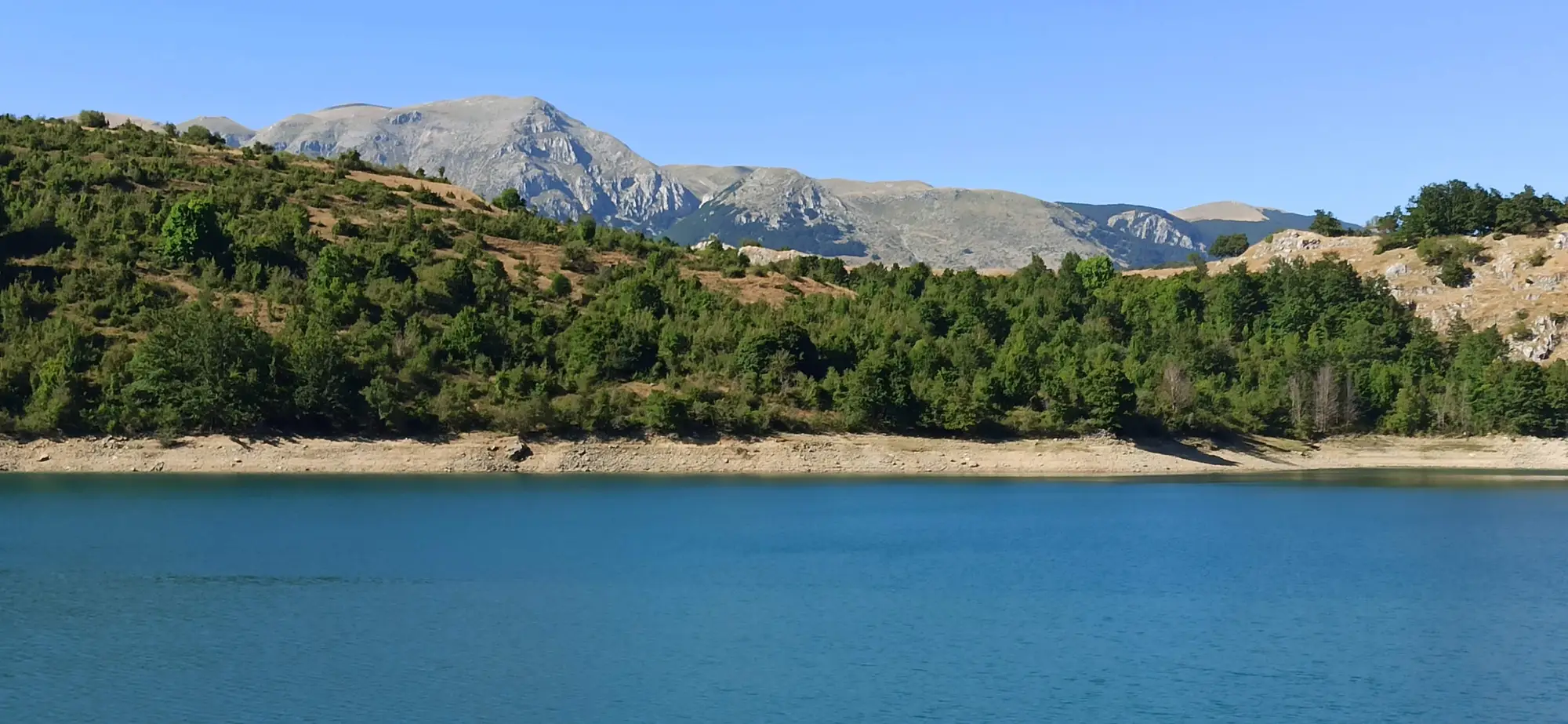
It seemed destined to be shelved under the weight of the numerous objections filed as part of the Environmental Impact Assessment process. Among these, the strongly negative opinion of the Abruzzo, Lazio, and Molise National Park stands out, as it highlighted the project’s incompatibility with the protected area’s conservation objectives. Yet the Pizzone II project may soon find a new way to get back on track.
This is not merely an administrative or energy-related issue. At stake is one of the most important habitats for the conservation of the Marsican brown bear, a population unique in the world that survives thanks to the ecological integrity of the Abruzzo, Lazio, and Molise National Park and the surrounding areas. These habitats form a mosaic of forests, grasslands, and waterways that allow the bear to feed, reproduce, and move about, while also supporting an extraordinary community of animal and plant species. Disrupting this balance would undermine decades of work to conserve biodiversity in the central Apennines.
The risk is called MACSE
The potential relaunch of the project will be carried out through the Electric Storage Capacity Procurement Mechanism (MACSE), promoted by Terna and approved by the Ministry of the Environment. The system provides for the awarding, through public auctions, of contracts for the construction of energy storage facilities.
On July 7, the application period for admission to the platform opened, while the online auction is scheduled for November 24, 2026. It is precisely through this mechanism that Pizzone II could qualify for public funding.
A system that rewards industrial gigantism
MACSE was established with the goal of increasing the storage capacity of the national power system, with a total target of 16 GWh set through a call for proposals. However, the mechanism’s design appears to be heavily skewed in favor of large-scale facilities.
Selected operators are awarded long-term contracts that guarantee financial compensation for the availability of storage capacity. In this way, business risk is virtually eliminated: investments can be recouped within five to ten years, after which the facilities continue to generate profits. If the market does not adequately compensate these investments, the government steps in using public funds.
The result is a system that ultimately encourages ever-larger and more expensive projects, shifting part of the economic risk onto the general tax base and creating a fast track for large project proponents.
An energy transition that risks sacrificing biodiversity
The problem is not limited to the economic mechanism. The MACSE rules are not truly technology-neutral: in fact, they favor large-scale storage facilities, while distributed solutions—which are integrated with existing infrastructure and have a lower environmental impact—are at a disadvantage.
In the case of Pizzone II, this would mean turning the valleys between Abruzzo and Molise into a massive construction site, with new tunnels, artificial caverns, and infrastructure projects designed to facilitate the operation of the Montagna Spaccata and Castel San Vincenzo reservoirs.
This is the heart of the Central Apennines, one of Italy’s most pristine landscapes and part of the core range of the Marsican brown bear.
For a population numbering only a few dozen individuals, any further fragmentation of the habitat poses a real risk. Large construction sites, noise, heavy vehicle traffic, new infrastructure, and ongoing land development can disrupt the tranquility of the species’ foraging, breeding, and migration areas, further reducing the ecological quality of habitats essential to its survival.
But the bear is not the only species involved. The ecosystems of the Abruzzo, Lazio, and Molise National Park are home to an extraordinary wealth of flora and fauna: the Apennine wolf, the wildcat, the otter, the red deer, the roe deer, the Apennine chamois, numerous birds of prey, and plant species of high conservation value. Altering these habitats means compromising the ecological balances that enable the survival of the entire biological community.
The possible inclusion of Pizzone II in the MACSE would also set a very serious precedent, one that could render meaningless the protections provided for in the Framework Law on Protected Areas. If even an area recognized nationally and internationally for its natural value can be sacrificed in the name of the energy transition, the very principle of biodiversity conservation risks being subordinated to economic interests.
There are alternatives
Increasing the storage capacity of the national power grid may be a laudable goal. But that does not mean that public funds should be directed almost exclusively toward massive-scale projects.
There are models that are much better suited to the local context: distributed storage systems integrated with existing infrastructure, innovative low-impact technologies, and the Renewable Energy Communities model, which demonstrates how decentralized energy production and management can increase grid resilience, reduce environmental impacts, and generate economic and social benefits for local communities.
The energy transition must not become a pretext for financing only large-scale industrial projects. Innovation also means choosing solutions that use less land, make the most of existing infrastructure, and respect our natural heritage.
The mobilization continues
For the No Pizzone II Coalition, the position remains unchanged: the project was and remains incompatible with an area of extraordinary environmental value.
That is why it is essential that citizens, organizations, institutions, and public officials remain vigilant. The risk is by no means over, and MACSE could offer a new opportunity for a project that seemed to have stalled.
There can be no compromises or trade-offs when the integrity of the Abruzzo, Lazio, and Molise National Park and the conservation of the Marsican brown bear are at stake. The protection of this species is not merely a matter of the fate of a population that is unique in the world: the bear is an umbrella species, whose conservation ensures the protection of vast ecosystems and the numerous animal and plant species that inhabit them. Defending its habitat means preserving the ecological connectivity of the central Apennines, the functionality of forests, grasslands, and waterways, thereby ensuring a future for the Apennine wolf, the Apennine chamois, the wildcat, large raptors, and a biodiversity that represents a natural heritage of European significance.
A true ecological transition cannot be limited to reducing greenhouse gas emissions: it must be able to combine energy security, the protection of biodiversity, and respect for local communities. Using public funds to finance projects that compromise the Apennines’ most precious habitats means betraying the very principles that the ecological transition is meant to uphold. That is why we will continue to oppose Pizzone II and any project that, in the name of energy, puts our country’s most important natural capital at risk.
> Download the full press release and help us share it.
Cover photo: No Pizzone II Coalition